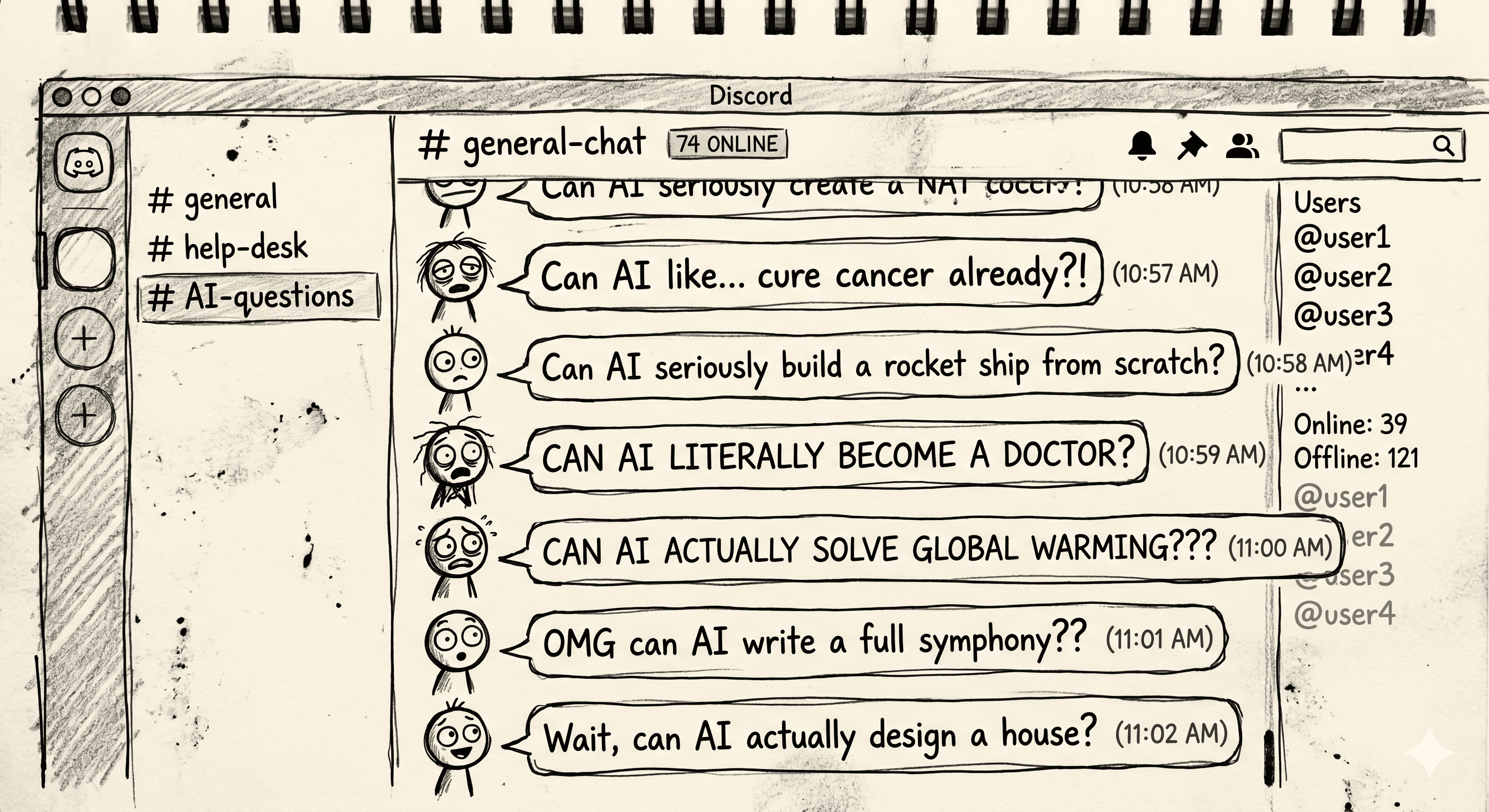
Last Wednesday, while hosting an "AI for Beginners" session at the Furlough Discord community, I realized something unsettling. Every question I received followed the same pattern: "How can I use AI to handle X?"
The problem was X being almost always a task that could be easily solved by simple code. To some extent, that's expected — it was a talk aimed at beginners and non-technical folks. But I do think AI overuse is real, and there's a clear incentive from providers to make you believe AI is the answer to every problem. I want to push back on that. What follows is a guide for understanding which problems actually benefit from LLMs — and which ones are just a very expensive way to guarantee your system will fail.
Deterministic vs Non-deterministic problems
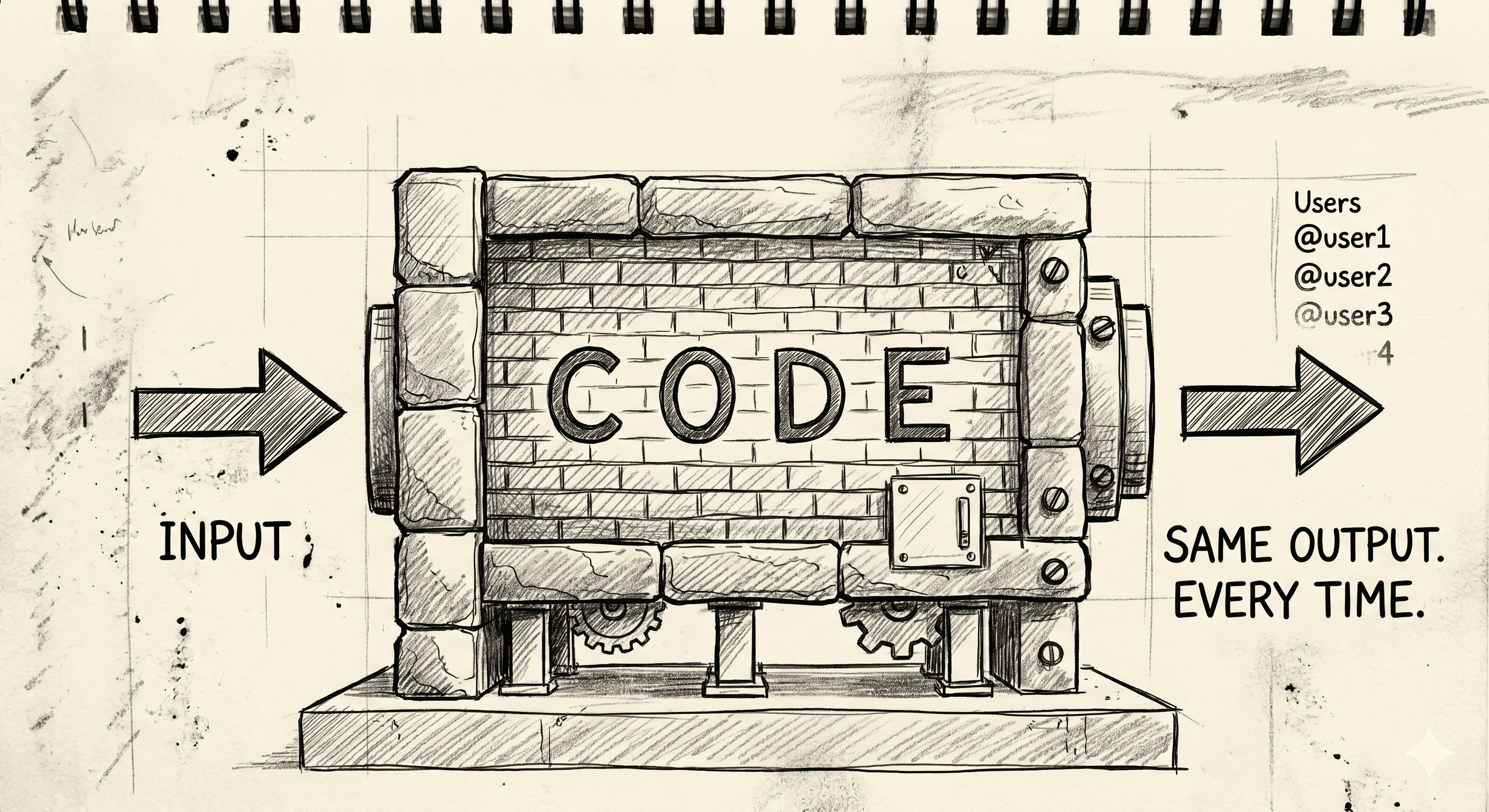
In software, we rely on deterministic processes: inputs that yield the exact same output, every single time. It's the bedrock of stability. When you automate a data validation step or a file-naming convention, you don't need a transformer model — you need a deterministic algorithm.
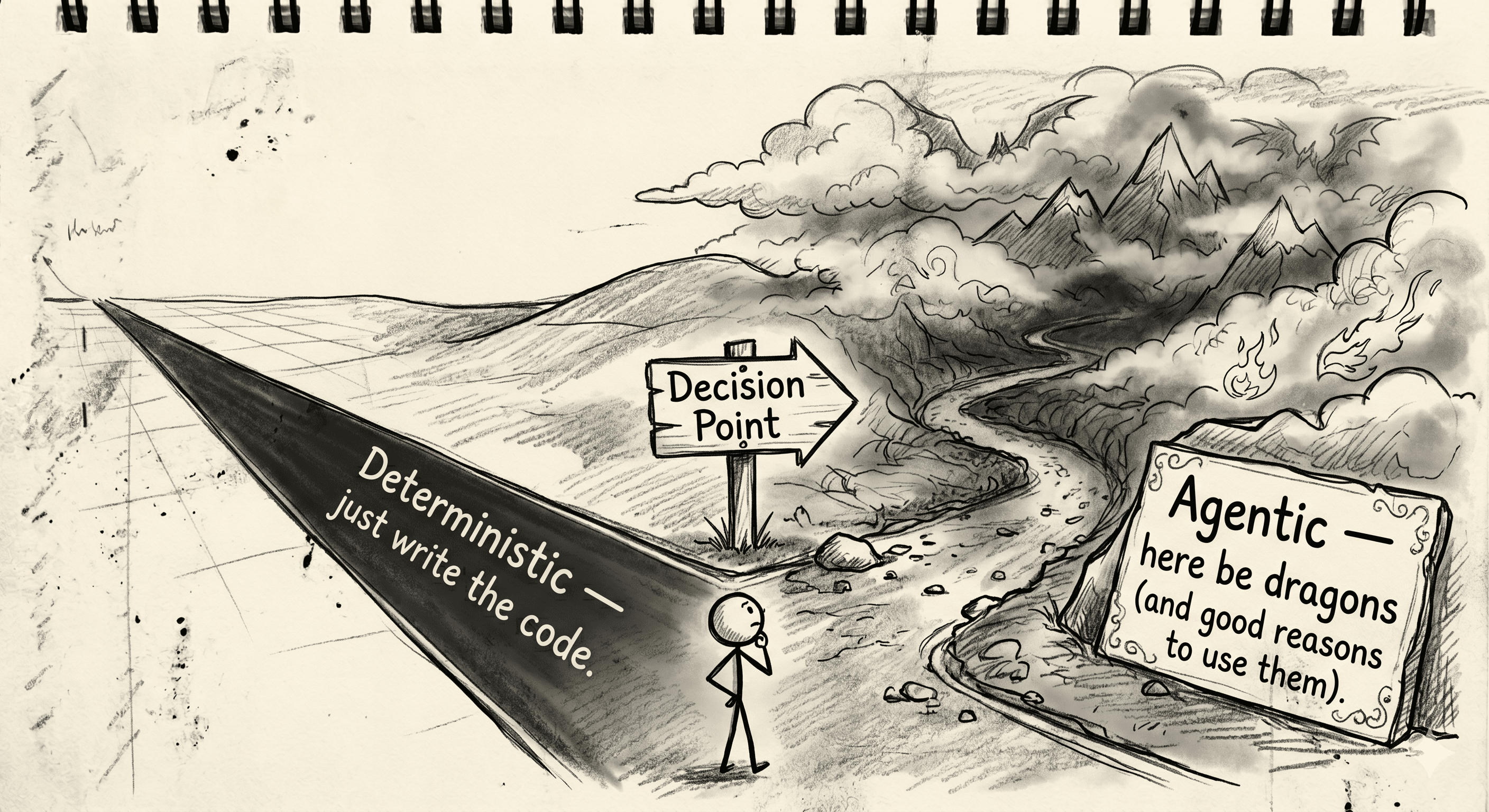
The real magic of agentic workflows isn't in replacing code; it's in knowing when to stop using it. Use an LLM only when you hit a non-deterministic wall — when the input is unstructured, ambiguous, or requires human-like synthesis.
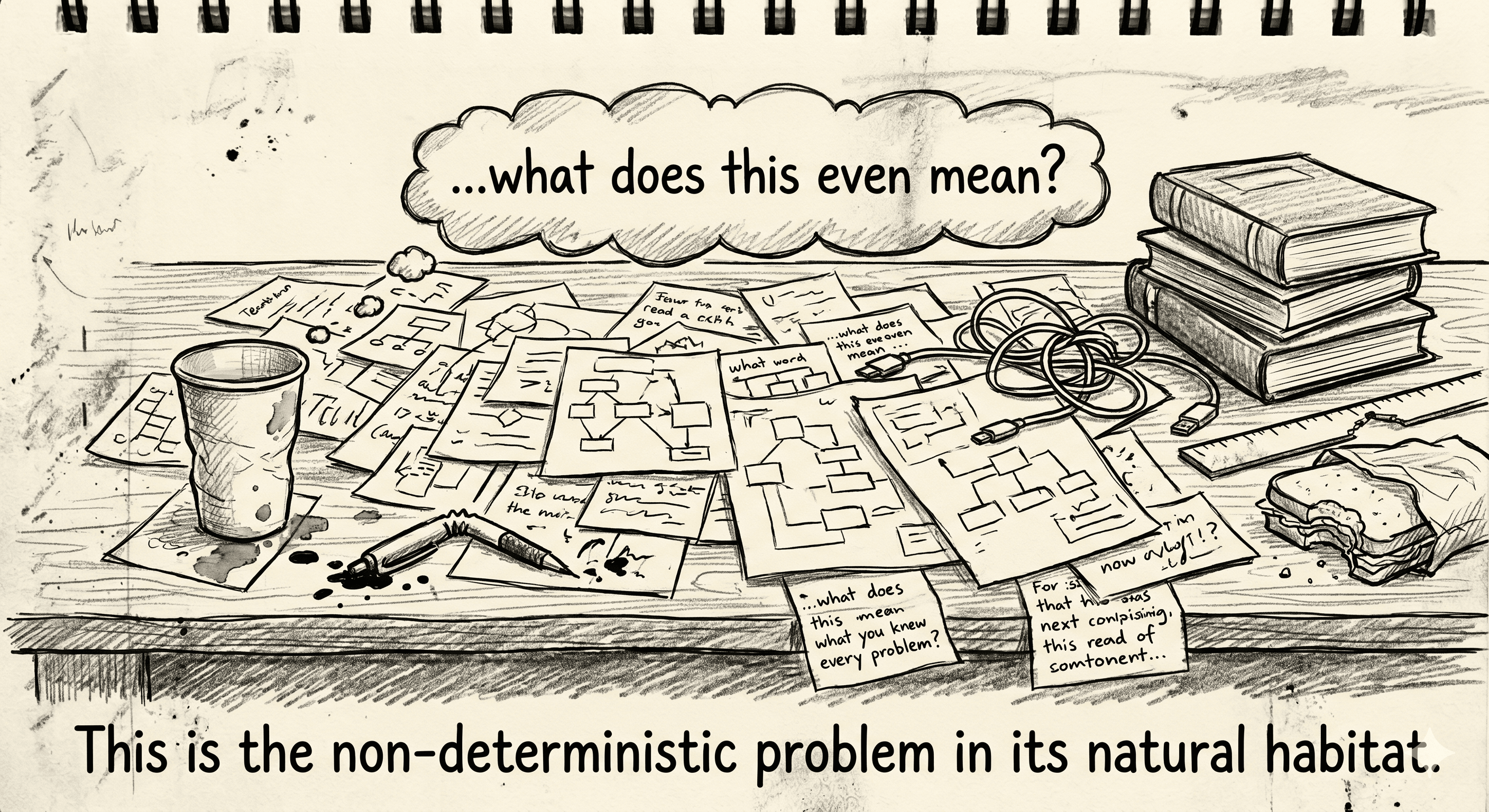
If your "Agent" is just forwarding emails to a dashboard, or checking a status, you aren't building an AI workflow; you're building expensive, unpredictable technical debt.
Using AI only where it's actually needed
When putting together an agentic system, after framing the problem I want to solve, the next thing I do is separate the exact parts that require LLMs from the ones that don't. That way we can cut costs as much as possible while keeping the system robust.
Think of it like a kitchen. Not every station needs a head chef — some steps are just chopping, timing, or plating. You bring in the expert judgment only where improvisation and interpretation are actually required.

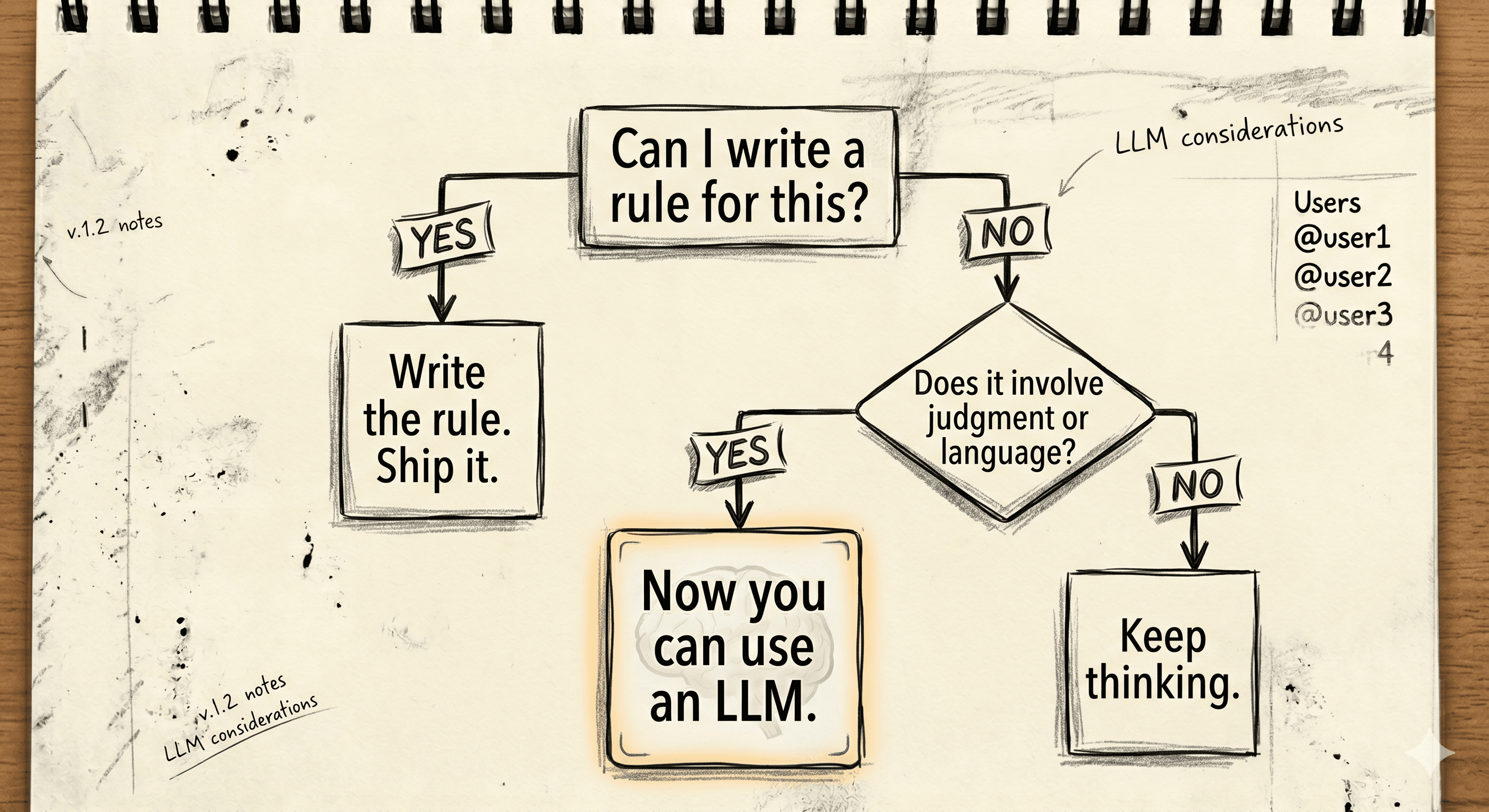
A practical way to do this: before reaching for an AI tool, ask yourself — "If I wrote a rule for this, would it cover 95% of cases?" If yes, write the rule. If the remaining edge cases involve judgment, nuance, or natural language — that's your LLM moment.