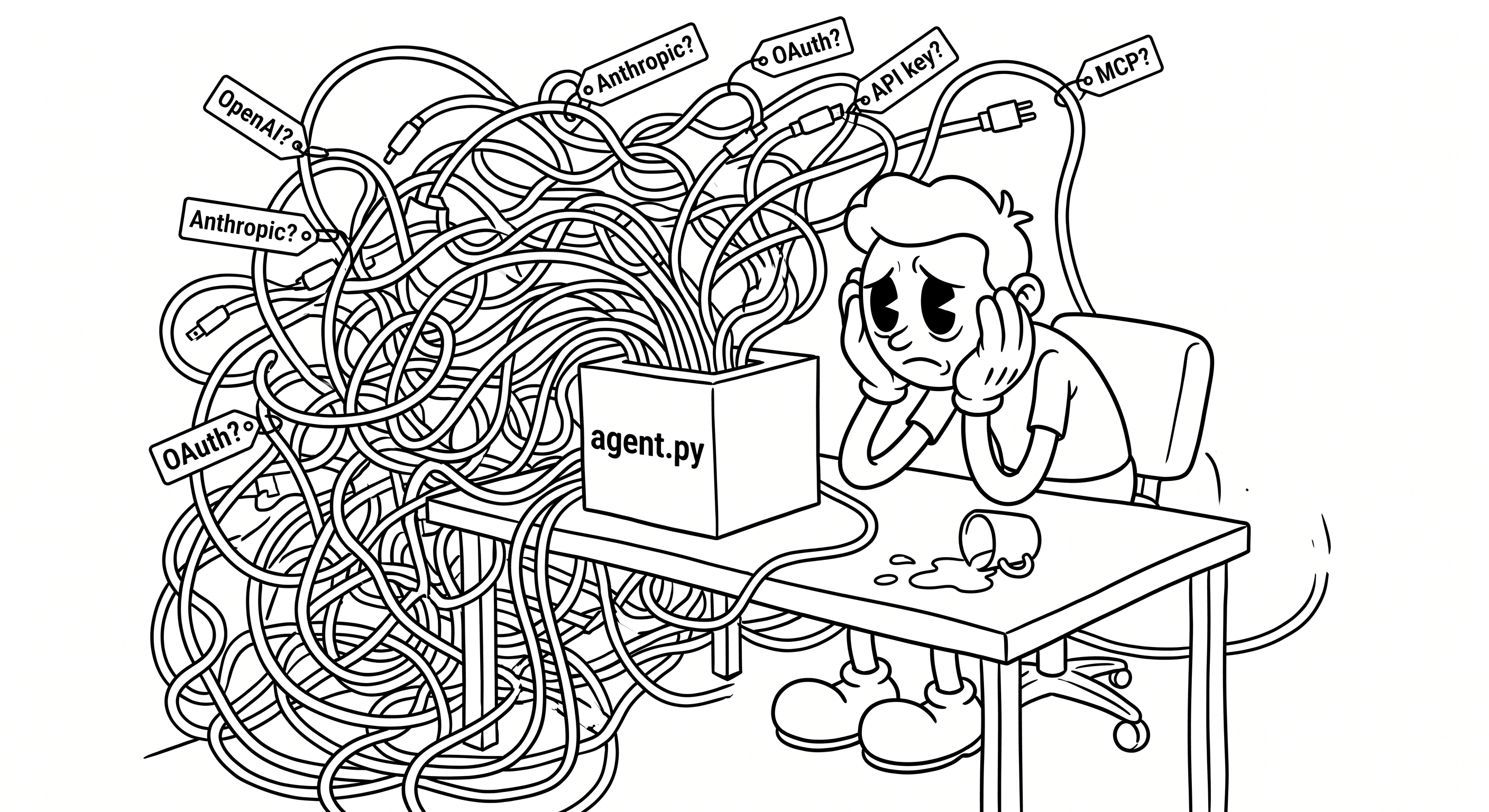
It always starts with a single script and an API key. But as your AI project grows, deopending on each case you suddenly need to swap OpenAI for Anthropic, connect to multiple MCPS, and handle distinct auth schemes. Before you know it, you already nested 5 if/else statements under the same method.
Fortunately this problem is not new or exclusive to AI agents, and was solved a long time ago by a pair of classic design patterns: Template Method and Strategy.
Keeping the structure simple and flexible: Template Method
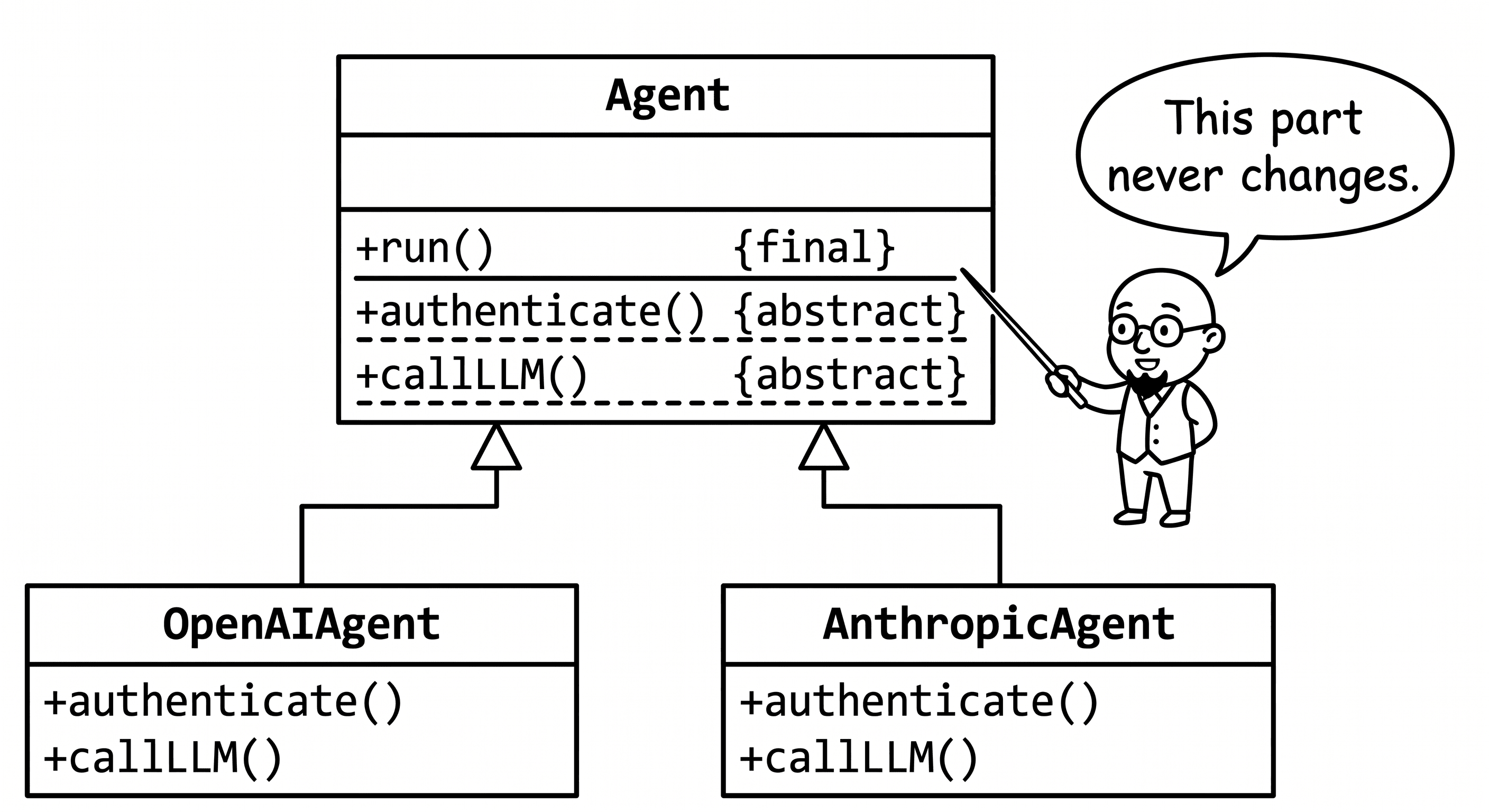
Every agent follows a predictable structure: An LLM provider, some tools either internal or via MCPs, maybe some authentication method and little more than that. The workflow is fixed, but the execution details vary wildly depending on the use case.
Using the Template Method pattern, I build a base Agent class that defines this immutable skeleton. It dictates what things happen, leaving the how to specialized sub-classes or pluggable components.
The easy Swap: Strategy Pattern
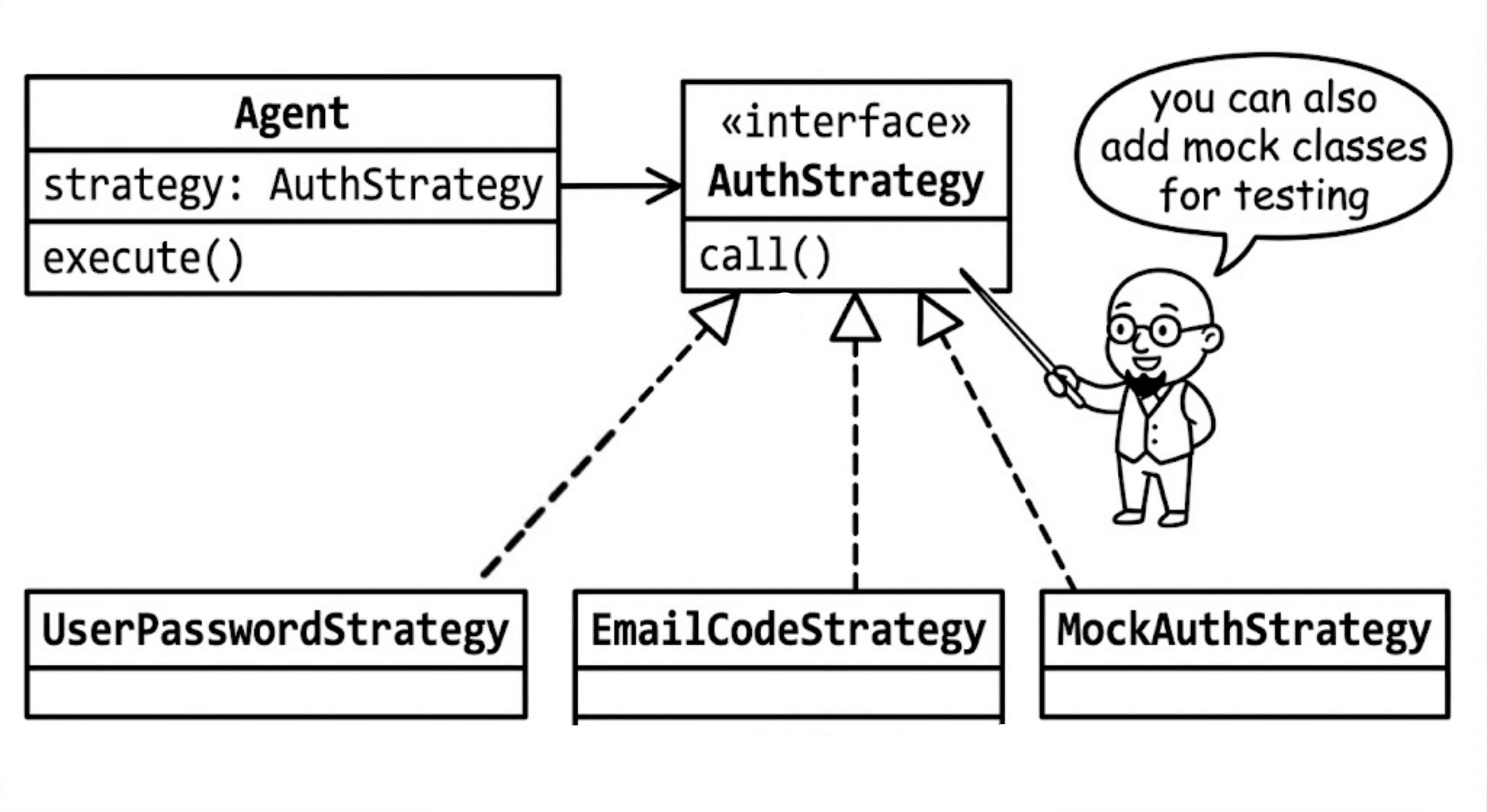
To keep the system flexible without drowning in inheritance, I decouple the moving parts—LLM providers, toolsets, and authentication mechanisms—into isolated, interchangeable Strategies.
Now, the core agent doesn't care if it's talking to a local model or a remote cloud infrastructure. It simply invokes an interface. Need to switch from production OAuth to a local mock API key? You just inject a different AuthStrategy during initialization.
Effortless ROI: Ready for Testing
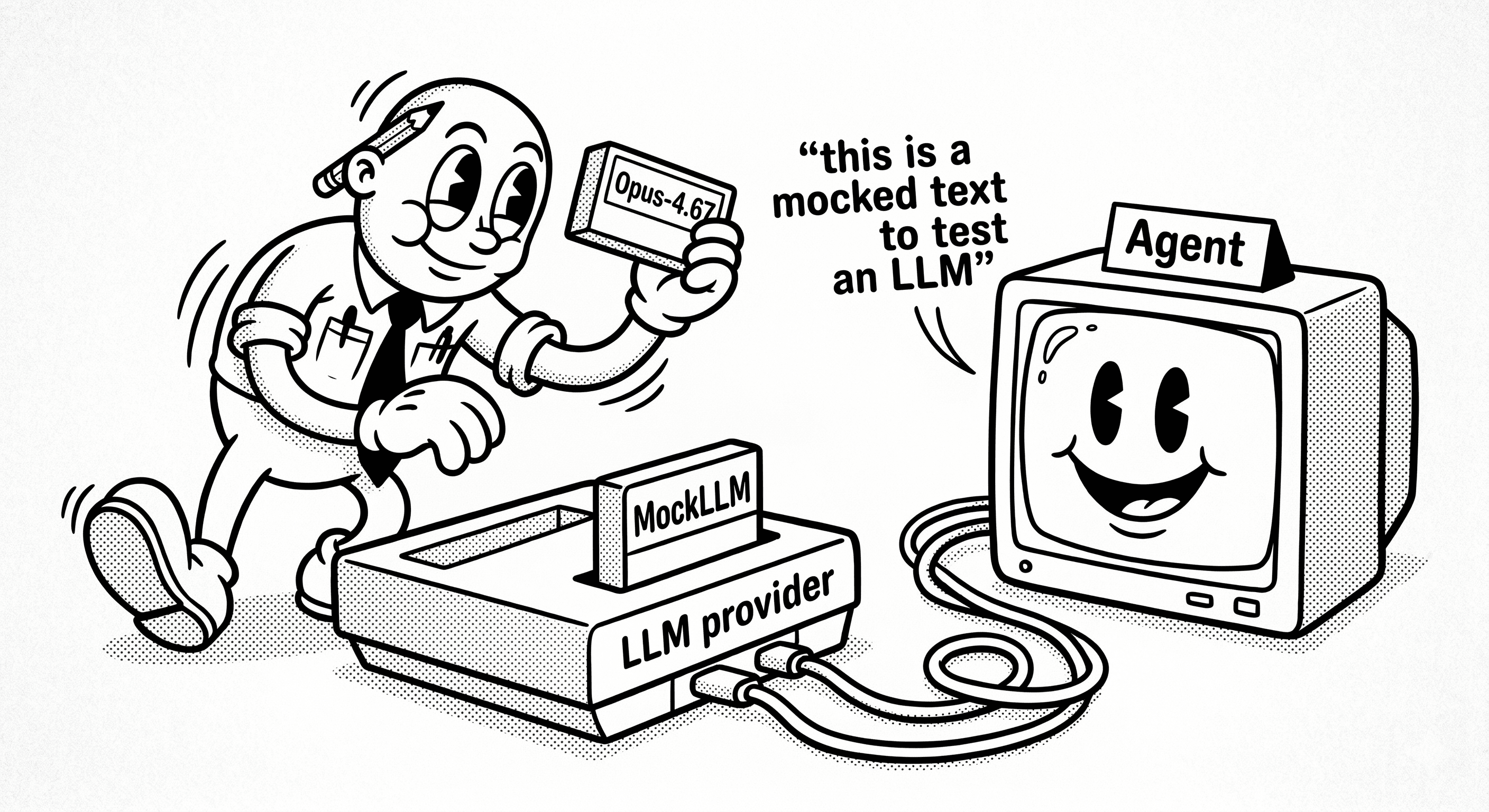
The greatest ROI of this architecture is how incredibly easy it makes testing. Instead of burning live API credits and wrestling with non-deterministic LLM outputs during integration tests, I can instantly pass a MockLLMStrategy into the agent.
The entire lifecycle executes flawlessly in milliseconds, completely offline. By anchoring cutting-edge AI workflows to time-tested software architecture, the codebase stays sustainable, scalable, and—above all—enjoyable to maintain.